 Model*
There is no set age at which you become too old for liposuction. Candidacy depends on your overall health, how close you are to your ideal weight, how well your skin recoils, and whether your expectations are realistic. A board-certified physician can assess those factors in a consultation and tell you what to expect.
Dr. Monika Kiripolsky is a board-certified dermatologist and fellowship-trained cosmetic and laser surgeon who performs tumescent liposuction in Beverly Hills. This guide explains what determines candidacy, from skin elasticity to medications, and what to ask at a consultation.
Is There an Age Limit for Liposuction?
Surgeons generally do not set a strict upper age cutoff for liposuction. A 35-year-old with a chronic health problem may be a poorer candidate than a healthy 65-year-old, which is why the question "how old is too old?" rarely has a single answer. Chronological age tells you how many birthdays you have had. Your physiological age, meaning how your body is actually functioning, tells a doctor much more.
Age still plays an indirect role. Skin tends to lose elasticity over time, healing can slow, and the odds of having other medical conditions or taking daily medications rise with each decade. Those factors, not the number itself, shape your results and your safety.
If you have been wondering whether you are too old for liposuction, the more useful question is whether your body is a good match for the procedure.
What Makes Someone a Good Liposuction Candidate?
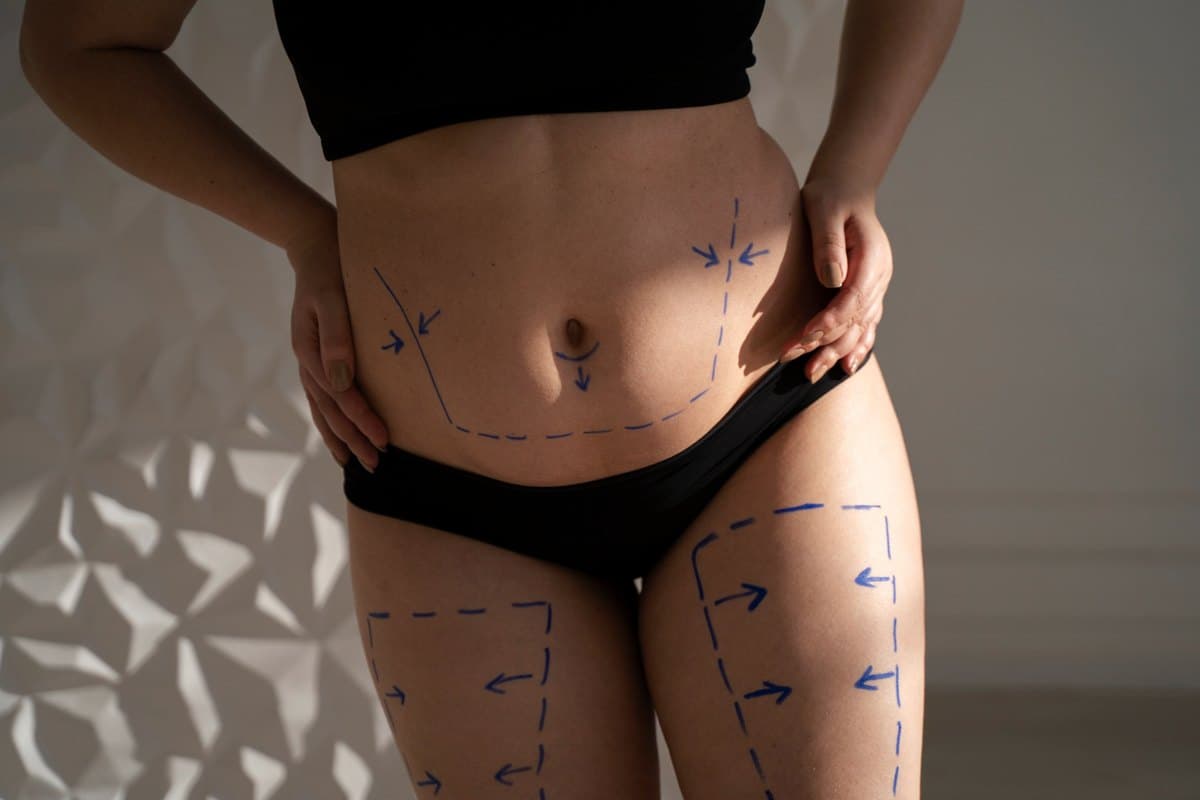
Dr. Kiripolsky describes the best candidates for liposuction as healthy men and women who are close to their ideal body weight and want to sculpt a specific area of unwanted fat. Four qualities matter most.
- Good general health. You should have no conditions that could interfere with the procedure or your recovery.
- Stable weight near your goal. Liposuction removes pockets of fat that have not responded to diet and exercise. It is not a weight-loss procedure.
- Decent skin elasticity. Your skin has to recoil after the fat underneath is removed.
- Realistic expectations. You should be willing to maintain your results with diet and exercise after you recover.
Ideally you also do not smoke. Dr. Kiripolsky will consider patients who are willing to quit for a period of time to improve healing and results. Notice that age appears nowhere on this list.
How Does Skin Elasticity Change the Results?
Skin elasticity is the factor most closely tied to age, and it is the one that deserves the most honest discussion. Liposuction removes fat, but it does not tighten skin. When elasticity is good, the skin retracts smoothly over the new contour.
When it is reduced, as it often is after years of sun exposure, weight changes, or pregnancy, the skin may not tighten fully and can look loose where the fat used to be.
A thoughtful consultation addresses this before the procedure. Your dermatologist can examine how your skin responds when it is pinched and gently stretched, and tell you whether liposuction alone is likely to give you the contour you want.
For some patients the better plan pairs fat removal with skin tightening, or involves a different approach entirely. That conversation is one reason to see a physician who offers more than one option instead of a practice that only does liposuction. To see how contours look after treatment, browse the practice's liposuction before-and-after gallery.
Does the Type of Anesthesia Matter for Older Patients?
It can. With Dr. Kiripolsky's tumescent liposuction technique, you need only local anesthesia. That means you avoid the risks and side effects associated with general anesthesia, and there is no need for sedatives or narcotics during the procedure.
The tumescent fluid itself does much of the work. It contains lidocaine to numb the tissue just beneath the skin and epinephrine to constrict blood vessels and limit bleeding. The suction device, called a cannula, is only a fraction of an inch in diameter, so it passes through tiny incisions.
For patients who worry about how their body will handle a longer or deeper anesthetic, this approach is a significant point in its favor.
Published safety data on tumescent liposuction under local anesthesia are reassuring. In a series of more than 4,000 patients, none had a serious complication requiring hospitalization.
What Health Conditions and Medications Affect Candidacy?
Preparation for liposuction includes a review of your health that goes beyond a quick glance at your chart. Dr. Kiripolsky orders blood tests and reviews your medications and supplements. She may ask you to adjust some of them before the procedure.
Blood thinners are a good example. They can cause excess bleeding and bruising, so you stop them for a set period beforehand, and only under your prescribing doctor's guidance. Nicotine in any form narrows blood vessels and slows healing, so you should quit for at least a few weeks before and after the procedure.
This screening matters more as people age, since older patients are more likely to take daily medications. Share every prescription, over-the-counter drug, and supplement you use, including the ones that seem harmless.
What Is Recovery Like at Any Age?
Liposuction is minimally invasive compared with many surgeries, so most patients go home the same day, as long as someone else drives. The treated area is swollen, sore, and often bruised at first. Many patients need only over-the-counter pain medication for a few days.
Here is the typical timeline Dr. Kiripolsky describes.
- You wear a compression garment for about 3 to 5 weeks, depending on how much was sculpted. It reduces swelling and lowers the risk of seroma, a pocket of fluid under the skin.
- You can often return to work in about 1 week, depending on your healing rate.
- You begin to see your results around 6 weeks, and they continue to improve over the next few months as residual swelling subsides.
Walking for short periods as soon as you feel well enough improves circulation and helps prevent blood clots. Follow your compression instructions closely, and ask about lymphatic massage. Some patients, especially those with other health conditions, may heal more slowly, which is another reason to ask your doctor what to expect for your own case.
What Should You Ask at a Liposuction Consultation?
 Model*
Come with questions, because the answers show whether the plan is built around you. Useful ones include the following.
- Based on my health and skin, am I a good candidate, and what are the risks for me specifically?
- How much improvement can I realistically expect in the areas I want to treat?
- Will my skin tighten enough, or should I consider a combined approach?
- What anesthesia will you use, and who will be with me during the procedure?
- What does recovery look like, and when can I return to exercise?
A doctor who answers these directly and acknowledges limits is one you can trust with your decision.
What Are the Alternatives if Liposuction Is Not Right for You?
If your consultation shows that liposuction is not the best fit, you still have options. For a small pocket of fat under the chin, Kybella is an FDA-approved injectable treatment that breaks down submental fat without surgery.
If your goal is to restore volume rather than remove it, fat transfer uses fat collected through liposuction and re-injects it elsewhere. The right choice depends on your anatomy and your goals, and a good doctor will name the alternatives instead of steering you toward one procedure. The practice's body contouring page lists the full range of options.
How Do You Find Out Whether You Are a Candidate?
Book a consultation. Dr. Kiripolsky reviews your overall health, discusses your body sculpting goals, explains the procedure and how to prepare, and answers your questions. She will also talk with you about alternative treatments that may suit your concern better. You leave knowing whether liposuction is a good match, what results to expect, and what recovery will ask of you.
Dr. Kiripolsky sees patients in Beverly Hills and Newport Beach, and you can book a consultation to learn whether liposuction suits you.
Frequently Asked Questions
Is there an upper age limit for liposuction?
There is no fixed upper age limit that applies to everyone. Candidacy depends on your overall health, weight, skin elasticity, and expectations. Dr. Kiripolsky reviews your medical history, medications, and blood work before recommending liposuction, so the decision rests on your individual health and not a birthday.
What is the best age for liposuction?
No single age is best. Younger patients often have better skin elasticity, which helps the skin contract after fat removal, but a healthy older patient with good skin quality can still be an excellent candidate. Dr. Kiripolsky evaluates both your skin and your health before recommending a plan.
Does liposuction work on loose skin?
Liposuction removes fat but does not tighten skin. If your skin has lost significant elasticity, it may not retract fully after treatment. Dr. Kiripolsky can assess your skin during a consultation and discuss whether liposuction alone, a combination with skin tightening, or another approach will give you the result you want.
Do I need general anesthesia for liposuction?
Not with Dr. Kiripolsky's technique. She performs tumescent liposuction using local anesthesia only, so you avoid the risks and side effects of general anesthesia. The tumescent fluid contains lidocaine to numb the tissue and epinephrine to constrict blood vessels and minimize bleeding.
Is liposuction safe for older adults?
Safety depends on your health more than your age. A published series of more than 4,000 tumescent liposuction patients reported no serious complications requiring hospitalization when an experienced surgeon performed the procedure. Older patients are more likely to take daily medications, so Dr. Kiripolsky orders blood tests and reviews every prescription, over-the-counter drug, and supplement before treatment.
How do blood thinners and smoking affect liposuction?
Blood thinners can cause excess bleeding and bruising, so you stop them for a set period beforehand and only under your prescribing doctor's guidance. Nicotine in any form narrows blood vessels and slows healing, so you should quit for at least a few weeks before and after the procedure. Dr. Kiripolsky will consider patients who are willing to quit for a period of time.
How long is recovery after liposuction?
Most patients go home the same day and return to work in about a week, depending on healing. You wear a compression garment for about 3 to 5 weeks, begin to see your results around 6 weeks, and continue to see improvement over the following months as swelling subsides. Some patients, especially those with other health conditions, heal more slowly.
What are the alternatives if liposuction is not right for me?
For a small pocket of fat under the chin, Kybella is an FDA-approved injectable that breaks down fat without surgery. Fat transfer uses fat collected through liposuction and re-injects it elsewhere to restore volume. Dr. Kiripolsky will name the alternatives that suit your anatomy and goals.

Monika Kiripolsky, MD, FAAD, FAACS
Board-certified dermatologist and fellowship-trained laser and cosmetic surgeon in Beverly Hills and Newport Beach. Every article is written or reviewed by Dr. Kiripolsky.
More from the blog
 Model*
How Long Is Recovery After Neck Liposuction?
Neck liposuction recovery typically brings swelling, bruising, and numbness during the first week, with most visible bruising fading by about two weeks.
Body Contouring9 min read
 Model*
CoolSculpting – Beware!
Not everything lives up to its promises … CoolSculpting promised an easy fix for stubborn fat without surgery.
Body Contouring2 min read
 Model*
What's the Difference Between Botox and Dysport?
Botox vs Dysport comes down to small differences in how quickly they work and how they are dosed, since both are botulinum toxin injections that smooth wrinkles for roughly three to four months.
Injectables9 min read