What Causes Melasma and Why Does It Keep Coming Back?
Medically reviewed by Dr. Monika Kiripolsky9 min read
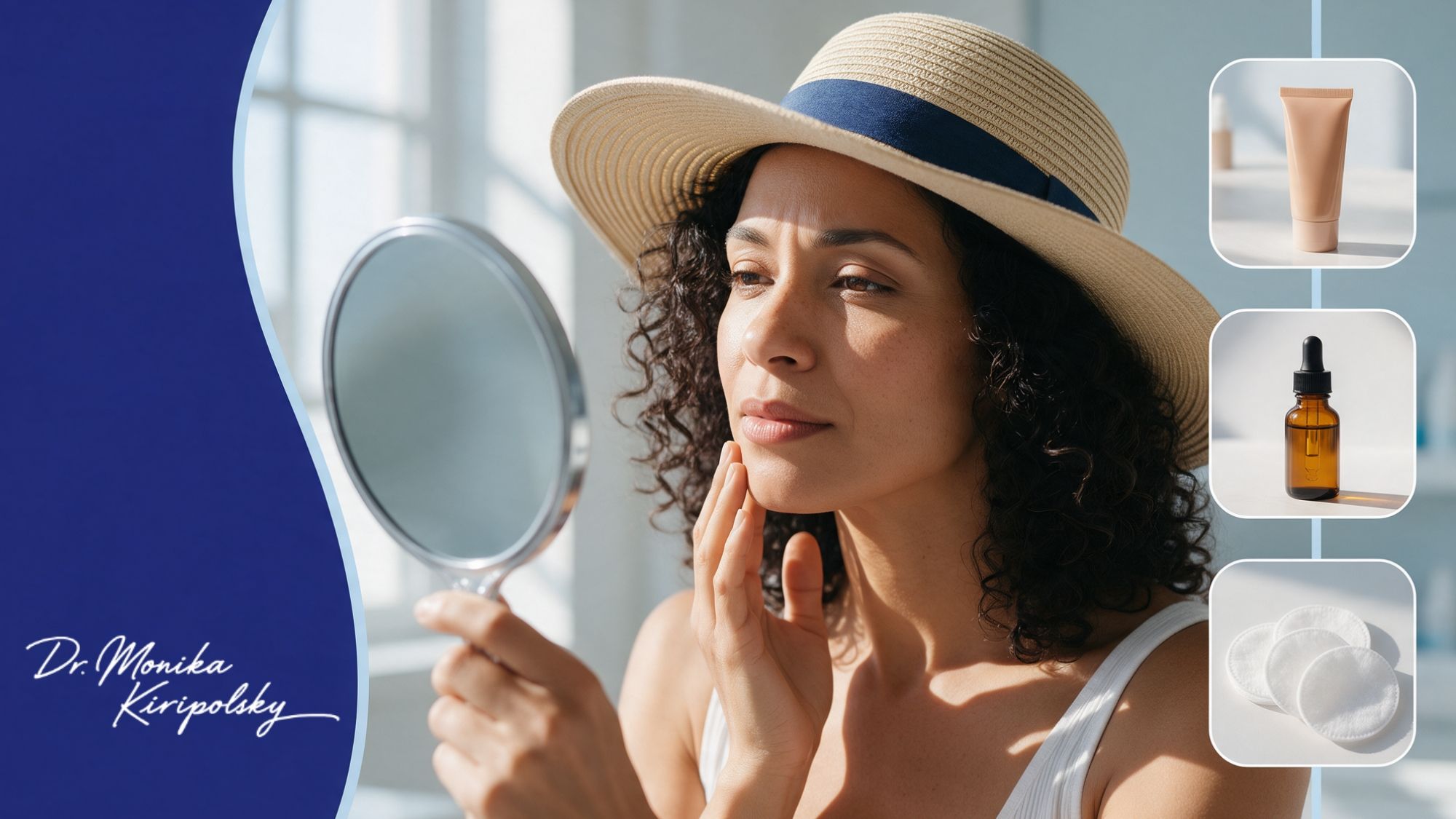
Melasma is caused by the overproduction of pigment in the skin, and hormones, sun, heat, and genetics all push it along. It keeps coming back because there is no permanent cure, so the condition is managed over time with sun protection and treatments that calm pigment production.
Dr. Monika Kiripolsky is a board-certified dermatologist and fellowship-trained cosmetic and laser surgeon who treats melasma in Beverly Hills and Newport Beach. This guide explains the triggers, why recurrence is common, and how a dermatologist builds a plan.
What Is Melasma?
Melasma is a common condition that causes flat brown or gray-brown patches, usually on the cheeks, forehead, upper lip, and chin, often in a symmetrical pattern. It develops when melanocytes, the cells that make pigment, become overactive and produce more melanin than the surrounding skin.
The patches are painless, but they can run deeper than the surface layer, which is why they resist simple fading creams. Melasma is more common in women and in people with darker skin tones, though anyone can develop it.
Melasma is classed by depth as epidermal, dermal, or mixed, and a dermatologist may use a special light to tell them apart. Mixed melasma is common, which is why a single cream often disappoints. Patches usually darken with sun and may lighten a little in winter.
Pigment cells called melanocytes make melanin, the brown pigment that colors skin. In melasma they stay overactive and deposit extra pigment in a symmetrical pattern, most often on the cheeks, forehead, and upper lip.
Because the patches track with hormones and sun and not with an infection or injury, melasma is a chronic condition that is managed and not cured. Early recognition gives you more options.
What Causes Melasma?
Several factors work together, and they differ from person to person.
- Hormones. Pregnancy, birth control, and hormone therapy can trigger it.
- Sun and visible light. Ultraviolet and visible light stimulate pigment cells.
- Heat. Warm environments and heated activities can worsen pigment.
- Genetics. About half of people with melasma have a family history.
- Thyroid disease. Melasma has been linked to thyroid conditions.
These triggers act on the same pathway. Hormones and heat signal pigment cells directly, and sun adds ultraviolet and visible light, so melasma often results from several small pushes. Inflammation from harsh skin care can add another push, which is why gentle routines matter.
Visible light, the part of sunlight you can see, can darken melasma even when sunscreen blocks ultraviolet rays. Tinted mineral sunscreens containing iron oxides block more of that light than clear formulas do, so they are often recommended.
Why Does Melasma Keep Coming Back?

The tendency stays even after patches fade. Pigment cells remain sensitive, so the same triggers that caused the first episode can cause another, and a summer of sun, a hormone shift, or a skipped sunscreen can bring patches back. Dr. Kiripolsky explains that there is no permanent cure, so the goal is control. Patients who keep up sun protection and maintenance care tend to hold their gains longer.
Patches that clear in winter often return in summer, and a new pregnancy or a change in birth control can bring them back. A maintenance plan, with sunscreen, a gentle topical, and periodic touch-ups, is designed for this. Early action at the first hint of darkening keeps flares small.
Melasma recurrence is typical, and it does not mean treatment failed. Pigment cells retain a memory of past stimulation, so they restart quickly when sun, heat, or hormones push them again.
Why Does Sun Protection Matter So Much?
Sun is the most controllable trigger. Visible light and heat stimulate pigment cells along with ultraviolet light, so a standard sunscreen leaves gaps. Dr. Kiripolsky recommends SPF 30 or higher, and a tinted mineral sunscreen helps because the iron oxides in the tint block visible light.
Reapply during the day, wear a wide-brimmed hat, and limit midday exposure. Southern California sunshine makes these habits important in Beverly Hills and Newport Beach.
Broad-spectrum sunscreen applied every morning and reapplied every two hours outdoors gives the most consistent protection. Dr. Kiripolsky can recommend tinted formulas that look natural and add protection against visible light.
How Is Melasma Treated?
Treatment layers several tools, since no single option clears it. Her multimodality plan may include:
- Topicals. Hydroquinone slows the enzyme that builds pigment, while retinoids, vitamin C, and salicylic acid pads improve tone and turnover.
- Peels. Gentle chemical peels speed shedding of pigmented cells.
- Picosecond laser. Short pulses break pigment into tiny particles, and three to five treatments are typical, with some results after two.
- M22 laser. It addresses the redness that sometimes accompanies melasma.
- Oral medication. Tranexamic acid or isotretinoin can help selected patients.
Topical treatments usually run for several months, and hydroquinone is typically used in cycles and not indefinitely, which is why a doctor supervises it. Peels and lasers are timed around your skin's tolerance. Because melasma is chronic, treatment is staged, with a clearing phase followed by maintenance.
Brightening ingredients such as azelaic acid, tranexamic acid, and vitamin C work through different steps of pigment production, so they can be layered with a prescription cream. Oral tranexamic acid is sometimes used for stubborn cases, but it requires screening for clotting risk first.
Sun protection continues throughout treatment, because sun exposure can undo weeks of progress in a single afternoon.
Does Combination Treatment Work Better?
Combining ingredients tends to outperform single agents. In one trial of a triple-combination cream, melasma cleared completely in 26.1 percent of patients by week eight, compared with 9.5 percent or less for the two-ingredient versions. Dr. Kiripolsky builds on that idea by pairing products and procedures that attack pigment from different angles.
A triple-combination cream pairs hydroquinone to block pigment production, tretinoin to speed turnover, and a mild steroid to calm inflammation. Each ingredient handles a different part of the pigment cycle, which explains the stronger result. Dr. Kiripolsky prescribes combinations based on your skin and tolerance.
Light chemical peels, typically a series spaced about three to four weeks apart, can speed lightening by removing pigmented surface cells. Low-energy laser toning uses gentle pulses repeated over several visits, which warms pigment cells less than a high-energy laser does.
Results usually build over months and not weeks, so consistent follow-up visits are part of the plan.
Who Should Avoid or Wait on Melasma Procedures?
Lasers and deep peels are not appropriate for everyone. If you have an autoimmune condition or a history of keloid scarring, discuss the risks first. Pregnant patients should wait on procedures, and oral tranexamic acid is generally avoided when there is a history of blood clots. Aggressive heat or irritation can worsen melasma, so treatment is gentle and gradual.
Pregnancy and breastfeeding change which topical and oral treatments are appropriate, and many are deferred until afterward. If you are planning a pregnancy, discuss timing before beginning.
How Does Skin Tone Change Treatment?
Melasma is more common in darker skin, and those skin tones are also more prone to dark marks after irritation. A gentle, patient approach usually works best, with lower laser energy, careful peel selection, and strict sun protection. Dr. Kiripolsky tailors treatment to your skin and watches closely for early signs of irritation. See real outcomes in the melasma before-and-after gallery.
Darker skin has more reactive pigment cells, and an inflammatory response can leave long-lasting dark marks after a harsh treatment, so treatment intensity is dialed down and timed carefully. Lighter skin responds faster to some treatments but still flares with sun, so protection matters for everyone.
How Do You Get Started?
A dermatologist can confirm the diagnosis and tell melasma apart from sun spots or post-acne marks, which respond to different treatments. Dr. Kiripolsky also reviews hormone use and thyroid history, and she can discuss related concerns such as adult acne treatment.
Expect your first visit to include a skin exam, a review of triggers, and a staged plan with follow-up in a few weeks.
Dr. Kiripolsky sees patients in Beverly Hills and Newport Beach, and you can book a consultation to build a melasma plan that fits your skin.
Frequently Asked Questions
What causes melasma?
Melasma comes from overproduction of pigment, triggered by hormones, sun, heat, and genetics. A family history is common, and thyroid disease has been linked to it. Knowing your triggers is the first step toward controlling it. Identifying your triggers helps a plan target them.
Why does melasma keep coming back?
There is no permanent cure for melasma, and the same triggers can restart pigment production. Sun exposure, hormone changes, and irritation are frequent culprits. Consistent sun protection and maintenance treatment keep it under control. Preventive habits matter more over the long run than any single treatment.
Can melasma go away on its own?
Melasma linked to pregnancy may fade after delivery, but many cases persist without treatment. Ongoing triggers keep pigment cells active. A dermatologist can help you manage it. Patches triggered by pregnancy may lighten after delivery, but many persist.
What is the best treatment for melasma?
No single option works for everyone. Dr. Kiripolsky combines topicals, peels, and laser treatments tailored to your skin, and sometimes oral medication. This layered approach tends to give better control than one product alone. The best plan is the one matched to your depth of pigment and your skin tolerance.
Does sunscreen really help melasma?
Yes, because sun and visible light are major triggers. Use SPF 30 or higher, and consider a tinted mineral sunscreen that also blocks visible light. Daily use matters more than occasional heavy application. Tinted mineral formulas with iron oxides add protection against visible light.
Is laser safe for melasma?
It can be when chosen carefully, since heat can worsen melasma if settings are too aggressive. Dr. Kiripolsky uses a picosecond laser and tailors the energy to your skin. People with autoimmune conditions or keloid history should discuss risks first. Choosing a doctor experienced with pigment conditions is especially important.
How many laser treatments do I need?
A series of three to five picosecond treatments is typical. Some patients see improvement after two. Your plan depends on your skin and how it responds. Gentle laser toning is usually repeated over a series of visits.
Who is more likely to develop melasma?
It is more common in women and in people with darker skin tones. About half of patients have a family history. Hormonal changes and sun exposure raise the likelihood. Family history and sun exposure both raise the chance.

Monika Kiripolsky, MD, FAAD, FAACS
Board-certified dermatologist and fellowship-trained laser and cosmetic surgeon in Beverly Hills and Newport Beach. Every article is written or reviewed by Dr. Kiripolsky.
More from the blog
 Model*
What's the Best Acne Treatment for Adult-Onset Acne?
The best adult acne treatment depends on what is driving your breakouts, how deep the lesions go, and whether marks or scars are already forming.
Medical Dermatology9 min read
 Model*
Veins, Veins Go Away!
In the world of dermatology, I often find myself marveling at the incredible impact we can have on our patients’ lives.
Medical Dermatology2 min read

Beware the Trend: The Dangers of Intranasal Self-Tanning and Its Impact on Your Skin
Beauty trends often emerge on platforms like TikTok, promising quick and easy solutions for that coveted sun-kissed glow.
Medical Dermatology3 min read