How Do You Choose the Best Dermatologist in Beverly Hills?
Medically reviewed by Dr. Monika Kiripolsky9 min read
 Model*
The best dermatologist Beverly Hills has to offer is a board-certified physician whose training and experience match your concern. Verify certification and licensing, ask who performs your treatment, review real patient results, and book a consultation to see whether the doctor listens and explains the plan clearly.
Dr. Monika Kiripolsky is a board-certified dermatologist and fellowship-trained cosmetic and laser surgeon who treats medical and cosmetic concerns, from acne and melasma to lasers and injectables, and offers a full menu of cosmetic procedures in Beverly Hills. This guide walks through the checks that matter, using her credentials as a reference point.
Why Is Choosing a Dermatologist in Beverly Hills So Hard?
Beverly Hills has a dense concentration of dermatology and cosmetic practices, and their websites tend to look alike. Each one promises natural results, advanced technology, and personalized care. When every practice uses the same language, the address and the marketing stop telling you much, and you have to look at what can be checked.
That includes four things. Is the doctor board-certified in dermatology? What additional training does the doctor have in the procedure you want? Who will be holding the needle or the laser? And what does the doctor's work look like in real patients? The rest of this guide takes each question in turn.
What Does Board Certified Actually Mean?
A board-certified dermatologist is a physician who completed medical school and a dermatology residency, then passed the specialty board's examinations. Residency is where a doctor learns to diagnose and treat the full range of skin, hair, and nail conditions, from acne and eczema to skin cancer. Board certification is the independent confirmation that the doctor met the standard for the specialty.
Do not rely on a website's claim. The American Board of Medical Specialties offers a free certification lookup at CertificationMatters.org, and you can check a doctor's license status and any disciplinary history through the Medical Board of California's license lookup. Both take a few minutes and tell you more than a homepage.
For reference, Dr. Monika Kiripolsky completed a three-year dermatology residency at the University of Illinois at Chicago and became board-certified in dermatology in 2008. She earned her M.D. at Vanderbilt University School of Medicine and her bachelor's degree at UCLA. You can read her full background on her about page.
Does Training Beyond Residency Matter?
For cosmetic and laser work, it can. Residency covers the fundamentals, but lasers, injectables, and body contouring each carry their own learning curve. Doctors who pursue a fellowship in cosmetic and laser surgery spend additional dedicated time learning those techniques.
Dr. Kiripolsky is a board-certified dermatologist and fellowship-trained cosmetic and laser surgeon. That combination means she can evaluate a stubborn medical problem and perform a procedure to correct it. If you have acne scars, for example, one doctor can diagnose the scar type, treat the underlying acne, and then use lasers or microneedling to improve the texture.
Research and teaching are another signal worth noticing. Dr. Kiripolsky has published research, presented at national meetings, and taught other physicians. Her profile lists 22 publications, 19 presentations, and 20 research studies, including work on botulinum toxins and fractional lasers. A doctor who helps test and refine a technique usually understands its limits better than one who only uses it.
Should You See a Medical or a Cosmetic Dermatologist?
You do not necessarily need two doctors. Medical dermatology treats conditions such as acne, eczema, melasma, moles, and rashes. Cosmetic dermatology focuses on appearance, with treatments such as Botox, fillers, laser resurfacing, and microneedling. A cosmetic dermatologist is simply a dermatologist who performs cosmetic procedures, and the best ones keep their medical training front and center.
That matters because cosmetic concerns often have medical roots. Persistent redness might be rosacea. A new dark spot might need a biopsy before anyone lasers it. Dr. Kiripolsky treats conditions such as acne, melasma, and moles and melanoma alongside her cosmetic procedures, so a single visit can address both sides of a concern.
What Should You Ask Before You Book?
 Model*
A consultation is also your interview of the doctor. These questions reveal a lot.
- Are you board-certified in dermatology, and where can I verify it?
- How many times have you performed this procedure?
- Who will perform my treatment? If the answer is anyone other than the doctor, ask about that person's training and who supervises.
- What are the realistic outcomes, and what are the risks?
- Which alternatives would you consider for my situation, including doing nothing?
- What happens if I am unhappy with the result?
Pay attention to how the doctor responds. A good dermatologist lays out options and explains the trade-offs. A doctor who recommends the same procedure to everyone, rushes you, or promises guaranteed results deserves caution.
How Can You Judge a Dermatologist's Results?
Look at real before-and-after photos of the procedure you want, taken from patients whose skin type and concern resemble yours. A photo gallery that shows only one kind of patient says little about your case. Dr. Kiripolsky's before-and-after gallery is organized by treatment, so you can compare results for acne scarring, injectables, liposuction, and more.
Reviews help, too, though they work best as a pattern. Read what patients say about the doctor's communication, the plan, and the follow-up, not just the outcome. You can read patient feedback on the practice's reviews page.
One more test applies to injectables in particular. Placement and dose determine whether Botox looks natural, and mistakes are visible, so ask to see injectable results specifically and ask how the injector learned facial anatomy.
What Red Flags Should You Watch For?
Some warning signs show up before you ever sit in the exam chair. Be wary of a practice that advertises prices without ever examining your skin, offers heavily discounted procedures that expire within days, or avoids saying who will perform your treatment. Be equally cautious if a doctor will not discuss risks, dismisses your questions, or recommends several expensive procedures on the first visit without explaining the reasoning.
Professional bodies give similar advice. The American Academy of Dermatology tells patients to walk away from anyone who offers laser treatment before a medical consultation. The American Society for Dermatologic Surgery Association takes the position that non-physician providers should be directly supervised by an on-site physician, which is why the question about who performs your treatment matters.
Good practices want you to understand your options and do not mind if you take time to decide. For anything elective, you can sleep on the recommendation, compare it with a second opinion, and return when you feel ready.
Does Location Within Beverly Hills Matter?
Not much. A good dermatologist is worth the drive across the Los Angeles area, and a prestigious address does not guarantee skill. Convenience still counts, because treatments such as acne care, microneedling series, and injectables require repeat visits. Choose the doctor first, and then check whether the commute fits your schedule.
What Is the Best First Step?
Start with the concern that brought you here. Write down what bothers you, how long it has been going on, and what you have already tried. Then book a consultation with a board-certified dermatologist and bring your questions. Dr. Kiripolsky considers your concerns, your overall health, and your skin type before recommending a treatment, and she is open about alternatives that might suit you better.
If you are comparing practices for a Beverly Hills dermatologist visit, you can explore her conditions and procedures to see whether your concern is one she treats.
Dr. Kiripolsky sees patients in Beverly Hills and Newport Beach, and you can book a consultation to ask your questions in person.
Frequently Asked Questions
What does it mean to be a board-certified dermatologist?
A board-certified dermatologist has completed medical school and a dermatology residency and passed the specialty board's examinations. Dr. Kiripolsky completed her residency at the University of Illinois at Chicago and became board-certified in dermatology in 2008. You can confirm any doctor's certification through the American Board of Medical Specialties.
How do I verify a dermatologist's credentials?
Use the American Board of Medical Specialties certification lookup at CertificationMatters.org to confirm board certification, and the Medical Board of California license lookup to confirm that the license is active and to check for disciplinary history. Both are free and public, and checking takes only a few minutes.
Is a cosmetic dermatologist different from a regular dermatologist?
A cosmetic dermatologist is a dermatologist who performs cosmetic procedures such as injectables, lasers, and body contouring. Dr. Kiripolsky is a board-certified dermatologist and a fellowship-trained cosmetic and laser surgeon, so she treats both medical conditions and aesthetic concerns.
Should I see the same doctor for medical and cosmetic concerns?
Often, yes. Many cosmetic concerns, such as redness, pigmentation, and scarring, have medical causes that need diagnosis first. A dermatologist who handles both can treat the cause and the appearance together, and can spot problems such as a suspicious mole during the same visit.
Who should perform my injectable or laser treatment?
Ask directly who will hold the needle or the laser, and if it is anyone other than the doctor, ask about that person's training and who supervises. The American Society for Dermatologic Surgery Association advises that non-physician providers be directly supervised by an on-site physician, and the American Academy of Dermatology advises patients to find a board-certified dermatologist for laser treatment.
How can I judge a dermatologist's results?
Look at real before-and-after photos of the procedure you want, from patients whose skin type and concern resemble yours. Read reviews as a pattern, paying attention to comments about communication, the plan, and follow-up. For injectables, ask to see injectable results specifically and ask how the injector learned facial anatomy.
What red flags should I watch for?
Be wary of a practice that advertises prices without examining your skin, offers heavily discounted procedures that expire within days, or avoids saying who will perform your treatment. Be equally cautious if a doctor will not discuss risks, dismisses your questions, or recommends several expensive procedures at the first visit without explaining the reasoning.
What should I bring to my first dermatology consultation?
Bring a list of your skin concerns, the products and medications you currently use, any past treatments and how your skin responded, and your questions for the doctor. Photos of how your skin looked before a flare-up can also help. Dr. Kiripolsky reviews your medical history and examines your skin before discussing a plan.
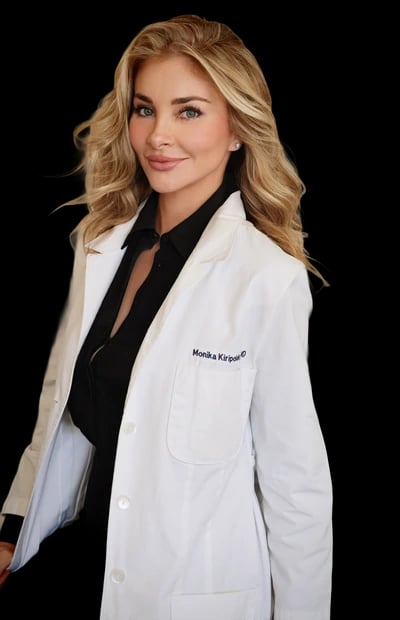
Monika Kiripolsky, MD, FAAD, FAACS
Board-certified dermatologist and fellowship-trained laser and cosmetic surgeon in Beverly Hills and Newport Beach. Every article is written or reviewed by Dr. Kiripolsky.
More from the blog
 Model*
Ask Your Doctor
From online blog posts to Tiktokers starting new skincare trends, it’s hard to discern fact from fiction. Well, I’m here to help!
Meet Dr. Monika3 min read
 Model*
Happy Hacks
Rather than just focusing on skincare trends to avoid, I’m going to provide you with some of my own hacks to leave your skin clearer, brighter, and overall, happier!
Meet Dr. Monika3 min read
“Skip-care” Products
Some say, “the more the merrier,” but when it comes to skincare, this may not always be the case. Find out which three beauty products you can actually skip …
Meet Dr. Monika3 min read